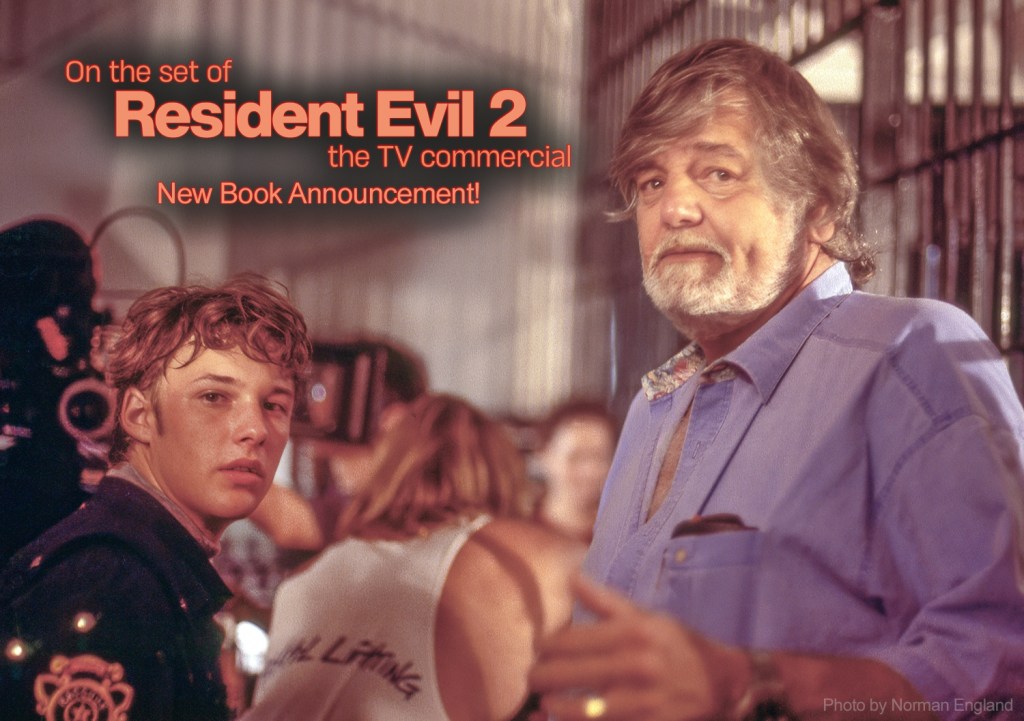
In 1997, Capcom did something amazing. They hired the father of the modern zombie film, George A. Romero, to direct a 30-second Japanese TV commercial for the launch of the Resident Evil 2 video game. This short advertisement would star the late Brad Renfro as “Leon S. Kennedy” and Adrienne Frantz as “Claire Redfield.”
I was a huge horror hound back then and remember reading about it in Fangoria magazine. I mean this wasn’t just a commercial, this was a Romero zombie commercial! I eagerly awaited its release, but unfortunately, it never aired in the United States as far as I’m aware. After all the hype, the project quietly vanished and life moved on. A blip on the Romero radar…until now.
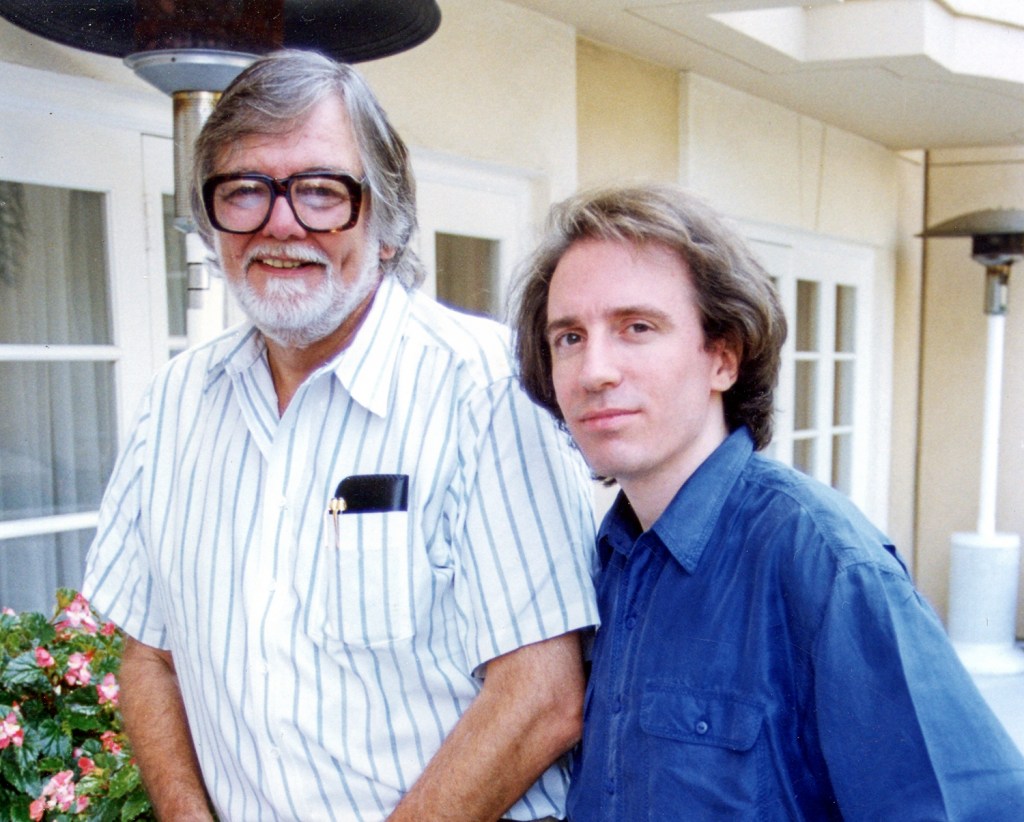
Enter journalist Norman England. Norman was hired onto the production back in 1997 to document the “energy, chaos, and artistry” on set and boy did he. Norman has quickly become one of my favorite writers. His work is personal and packed with all the little details that make you feel like you’re there. It’s less like reporting and more like reading letters from a friend.
Norman has spent much of his career in Japan covering a variety of genre films, from Godzilla to Gamera. (Basically, my dream job.) I first discovered his work through Behind The Kaiju Curtain: A Journey Onto Japan’s Biggest Film Sets, his incredible book chronicling the making of Godzilla, Mothra, and King Ghidorah: Giant Monsters All-Out Attack. Essential reading for any Godzilla fan.
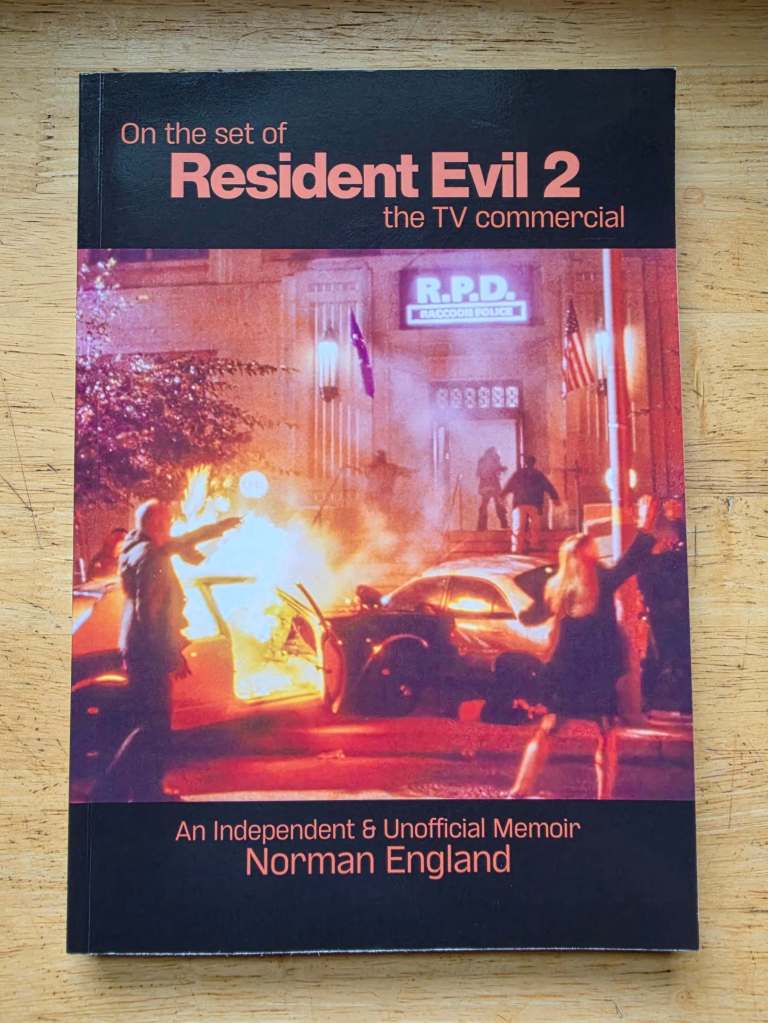
With his latest book, On the Set of Resident Evil 2: The TV Commercial, he’s done it again. It’s a rare record of Romero at work — and of the late Brad Renfro — built from countless behind-the-scenes photos, production documents, and Norman’s day-by-day account of his time with the cast and crew. It’s a real treasure.
I recently had a chance to talk with Norman about building the new book and his fascinating career. Hope you enjoy.
Your new book “On the Set of Resident Evil 2: The TV Commercial” is packed with set photos, production documents, and period press. How much of that had you held onto since 1997, and what was the hunt like to fill the gaps?
The set photos I took I’ve had since the production in 1997. Some of the other staff from Japan had their own cameras, so there must be set photos in private collections but I didn’t have access to any of that. Unless it’s a photo in which I’m in, everything in the book is something I shot on set. The hunt I did was for magazines with reports about the production for the “Media Archive” section of the book that I missed when they came out in ‘97 and ‘98. I had to spend a bit of money to fill in the blanks in my collection.
What did it feel like to look at these photos after all these years? Were there any surprises regarding what your younger self chose to photograph?
Looking at my Resident Evil 2 set photos today, I can only think about shots I missed, or that I should have taken a photo from a different angle. But it’s always that way when looking at past work. If anything, I’m surprised today by how many good photos I took despite having zero experience as a set photographer at the time.
What convinced you there was a whole book in this experience rather than a chapter or an article?
Originally, I planned to make it a hundred or so pages and just chronicle my involvement and pretty it up with my set photos. But as I started laying things out I got carried away and decided to add as much material as I could that related to the commercial. My goal then became to make a book that was as definitive as I could make it on the subject of the Resident Evil 2 game as it related to the Romero-directed commercial. What helped in this decision was the stack of magazines from 1998 with reports on the commercial I’ve held on to, many of which utilized my photographs, and also the documents those of us on the staff were given during production.
For readers who don’t know your story, Norman, how does an ex-New Yorker end up as the lone non-Japanese chronicler on Godzilla and Gamera sets?
To answer that would take a book…and I wrote one about this called “Behind The Kaiju Curtain.” Basically, I’ve always been interested in giant monsters and this interest led to me contacting Toho and Daiei in the late ‘90s about covering their films for Fangoria in America.
Speaking of Fangoria, for those of us who grew up with that magazine, it was hallowed ground. I have to ask: how did it feel the first time your name appeared in those pages?
I started reading Fangoria around issue 11, and it was my bible throughout the 80s. So, yeah, it was fun to get involved. But for legal reasons, I had to use a different name for the Resident Evil 2 issue. One of my set photos became the cover, which was attributed to my pen name! But I didn’t really care. I was just happy to be involved, and it gave me the confidence to pursue this line of work. After that, I went on to write close to 100 articles for Fangoria.
How did you end up as the one outsider invited onto a Capcom commercial set in 1997?
Again, this is the thrust of the book. But unlike Toho/Daiei, Capcom sought me out as they were looking for a “Romero expert,” to join the production.
What was your first encounter with Romero on that set actually like, and how did the relationship develop from there?
I don’t want to spoil the narrative of the book, but it was a very positive first meeting (although this set wasn’t the first time I’d met George). George always had a certain air of acceptance around him and would give people the benefit of the doubt when meeting them.
Romero always did things his own way. So what does it reveal about him to watch a fiercely independent filmmaker work inside the box of a Japanese video game ad?
It’s hard for me to answer that since I only ever saw him direct on this production, but I think he came to it with how it seems to me he came to all his productions: with the intention of following his filmmaking instincts.
Brad Renfro’s story ended far too soon, and the book feels partly like an act of remembrance. Without spoiling your account, what impression did he leave on you in those few days?
To be honest, I wasn’t familiar with his work when I met him, although I watched something he was in before flying out to L.A. As a person, he was easygoing and open, and I enjoyed all the talks we shared during the production. His early passing was a tragedy, and I tried to make the text in the book an honest and truthful remembrance of what it was like to be on set with him.
Did you have any sense at the time how this commercial would change the direction of your career?
Not in the slightest. The doors it opened at the time seemed to open organically, so I didn’t really put two and two together until many years later. Today, I see how clearly this production was a pivotal moment in my life. I don’t know where I’d be today if Capcom hadn’t pulled me in.
This book is clearly a labor of love, Norman. When a reader reaches the end, what’s the one thing you hope they carry away from it?
What I hope is that people get a feeling for what it was like to stand next to George Romero when he was directing and to get a sense of the kind of person he was. The same thing goes for Brad Renfro, who sadly passed away ten years later. Lastly, I want people to remember that this commercial was a big moment for the gaming industry. This is another reason for the inclusion of magazine articles and other material. It was a peak moment, and one I felt qualified to write about.
Thanks again to Norman England for taking the time to talk with me. You can purchase his books, On the Set of Resident Evil 2: The TV Commercial and Behind The Kaiju Curtain: A Journey Onto Japan’s Biggest Film Sets, on Amazon and other fine book retailers. Do yourself a favor and follow him on Patreon as well. His posts are every bit as interesting as his books.




Leave a Reply