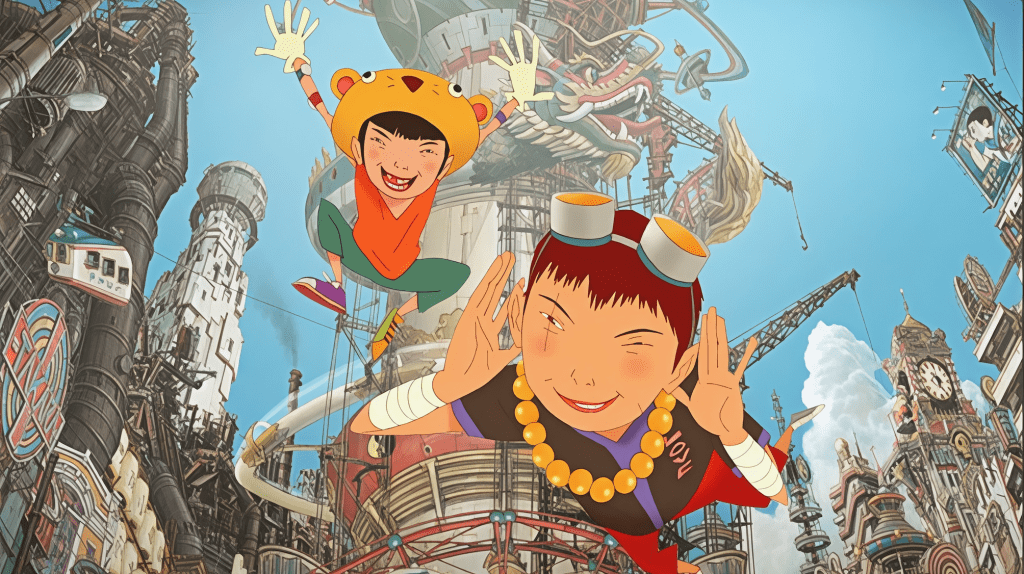
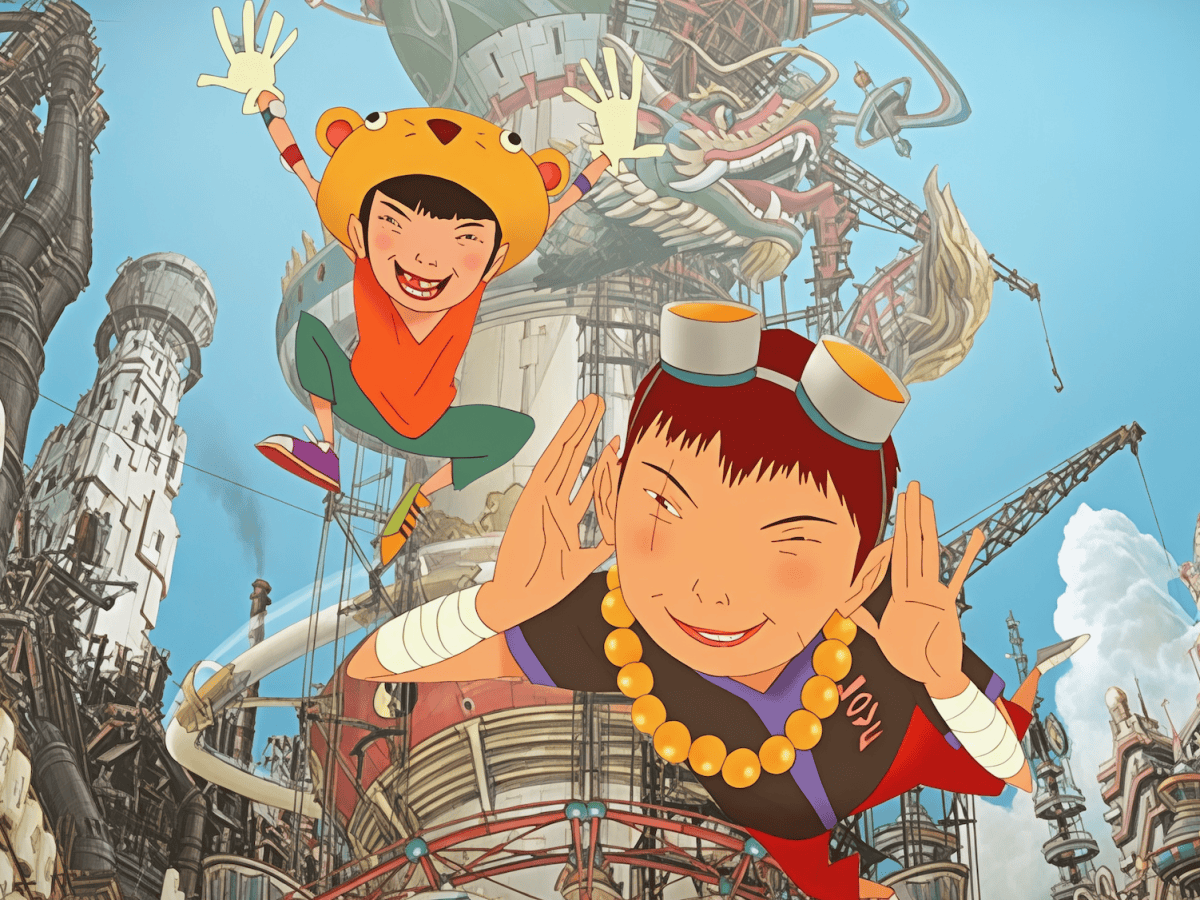
Twenty years ago, Taiyo Matsumoto’s manga Tekkonkinkreet was brought to life as a feature-length anime on the big screen. It was a fiery CG-cel hybrid animation unlike anything seen before it. I remember the first time I watched Tekkonkinkreet (2006), just a few years ago, and how hard it hit me. I sat there in silence as the credits rolled, trying to recover. It’s a deeply personal work that had a deeply personal effect on me.
Who directed this masterpiece? Why wasn’t it on everyone’s “Top 10 Best Films” list? Well, here we are two decades later and the film is finally getting its due in North America.

Tekkonkinkreet’s director is Michael Arias, an American-born filmmaker who has spent most of his career in Japan. He started out in Hollywood doing motion-control photography and practical effects and later developed the cel-shading software used on Studio Ghibli’s Princess Mononoke. He then went on to produce The Animatrix before making his directorial debut with Tekkonkinkreet. Yes, you read that right. This was his first feature film! Michael also holds the honor of being the first non-Japanese director to helm a major Japanese animated feature.
I recently had a chance to talk with director Michael Arias about revisiting the film after all these years, living inside Matsumoto’s words as his translator, and his ongoing adventures in Takashi Yamazaki’s Godzilla universe.
First of all, congratulations! Tekkonkinkreet just turned 20, had its first-ever nationwide theatrical run, and a 4K remaster Blu-ray hits shelves on September 1. What was it like watching it again after all this time, and did the 4K reveal anything you’d never noticed before?
Thank you. Well, 20 years is a big chunk of life, and Tekkonkinkreet was a very important project for me — really, the most important. Not just because making it was my life for so many years, but also because I was so young. So watching it again, in detail, was in some ways like looking at old photo albums. And working with the folks doing the 4k version, getting to see the film in a pristine state, under perfect conditions, was really a pleasure. It didn’t really reveal anything to me, because I have scrutinized every frame many, many times over the years. But it is a great pleasure to show it in such great shape to audiences, particularly in North America, that haven’t had the opportunity to enjoy it before.
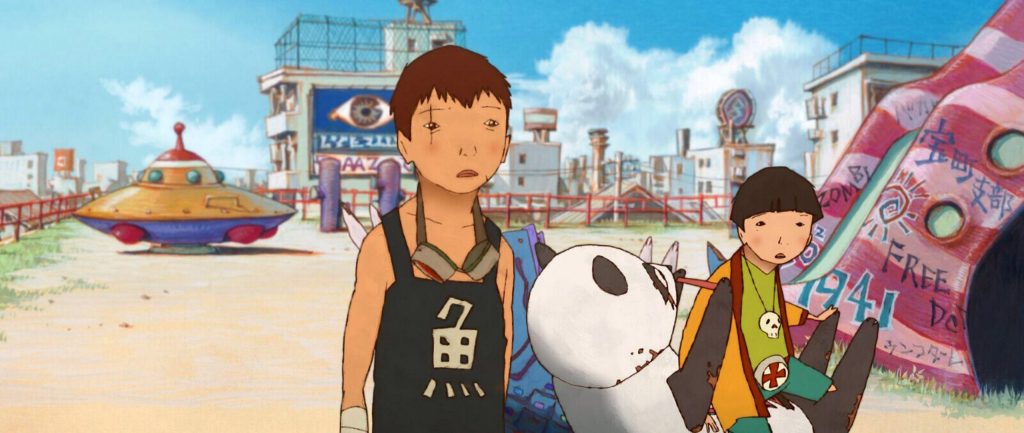
Tekkonkinkreet keeps finding new fans every year. Why do you think people keep being drawn back to Treasure Town?
The world of Taiyo’s creation is very powerful, and the story of love, friendship, and courage is a timeless one. And I think the unique mash up of DNA — mine with Taiyo’s and Anthony Weintraub’s and that of the animators and artists collaborating on Tekkon — ended up making something quite interesting. I’m really fond of a quote by Masahiko Sato, the mind behind the children’s education show PYTHAGORA SWITCH: “New methods naturally give rise to novel results.” Or, simply, “New methods, new things.” And I think that’s a good way to explain why Tekkon remains fresh.
My first experience with the work of Taiyo Matsumoto was his recent manga Tokyo These Days, and it quickly led me down the Matsumoto rabbit hole. What was your first encounter with his work, and how did it affect you?
In 1996 my Tokyo roommate handed me the manga Tekkonkinkreet — that was my first exposure to Taiyo, and I immediately became obsessed. It’s difficult for me to put into words what his work means to me, but Taiyo’s oeuvre exists on an elevated plane, alongside the creations of Fellini, Tarkovsky, Kurosawa, Camus, Rushdie, Otomo, Mozart, and Lennon; and, as such, it resists all rational analysis!
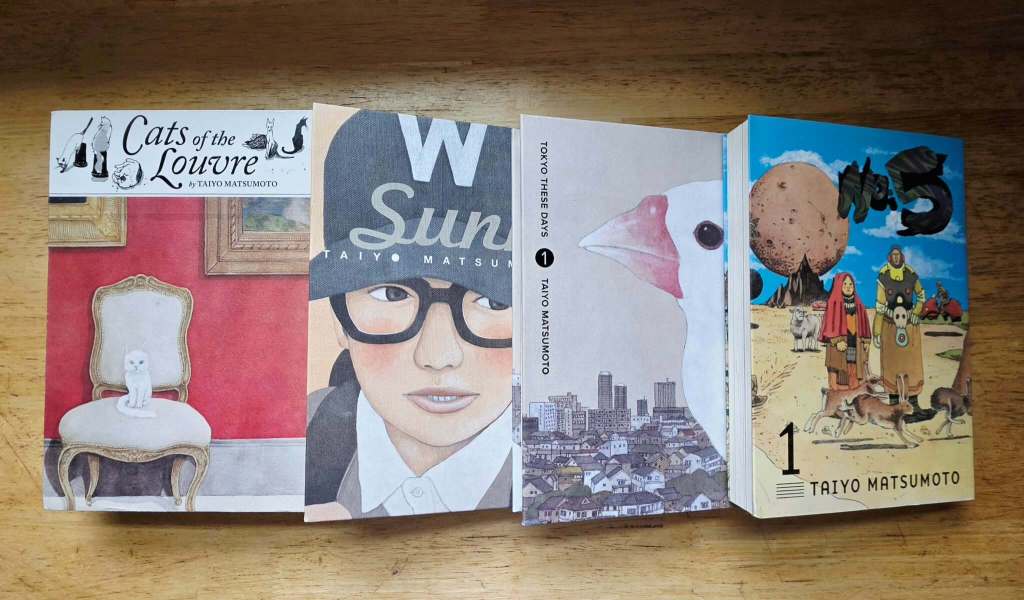
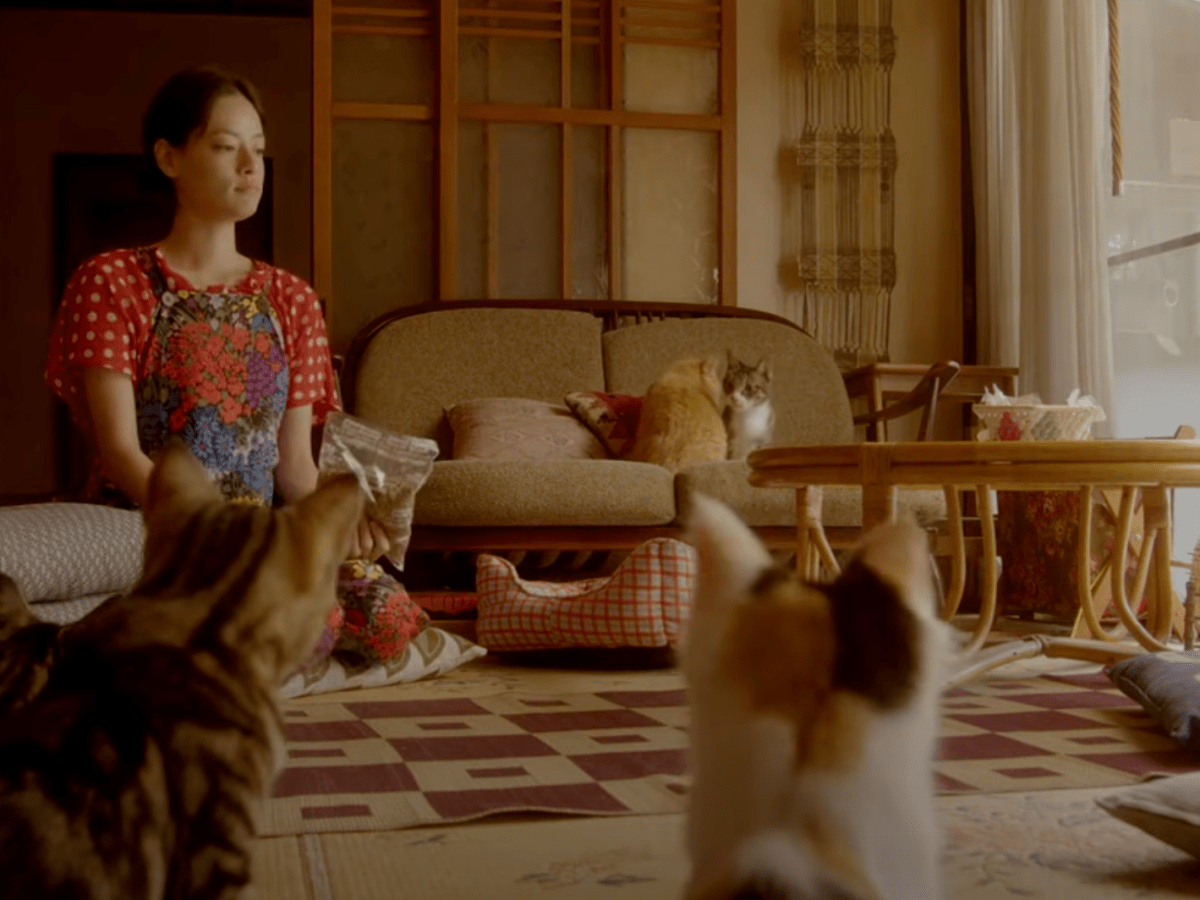
You’re also Taiyo Matsumoto’s English manga translator — Sunny, Ping Pong, and Cats of the Louvre, just to name a few. How did that come about, and what’s it like living that deep inside someone else’s words and images?
Just a great honor that Taiyo would entrust this work to me — I also translated Tokyo These Days and No. 5 — and so much fun going deep into the story and artwork. I really hope I’m doing the books justice with the English translations.
Do you have a favorite Matsumoto manga?
Well Tekkon holds a special place in my heart, but I don’t know if I’d call it my favorite. It depends on what mood I’m in at the time. But, I have a favorite “most underrated” Taiyo manga, called ZERO. It’s a very early work — pre-Tekkon — about an over-the-hill boxer who has yet to meet a worthy challenger and still has much to show the world. It’s never been officially translated into English, but it’s just so great. “GOD SAVE THE KNUCKLE” is the sub-title of the comic. I’ve always loved that.

Which brings us to the feature-length stop motion adaptation of Sunny you’re currently working on. As the man who pioneered the incredible CG-cel hybrid look for Tekkonkinkreet, how did you land on stop motion for this project?
The head of dwarf studios approached me about working together to adapt Sunny, so stop-motion has been the thing from the start.
Also, stop motion seemed a natural way to get back to my roots, in a sense. I started out doing miniature photography and old-school VFX, pre-CG, in Hollywood. And though I love hand-drawn animation and the process of making it, I’ve always wanted to keep working in the physical world too, using cinematography and stagecraft.
I’ve read that Sunny is Matsumoto’s most personal story. Does that change how it feels to adapt it?
It’s true that Sunny is semi-autobiographical — it’s a fictionalized version of his own childhood, in a group foster home. But actually, I think all of his work expresses something very personal. And, at least in that sense, I don’t feel different about adapting Sunny.
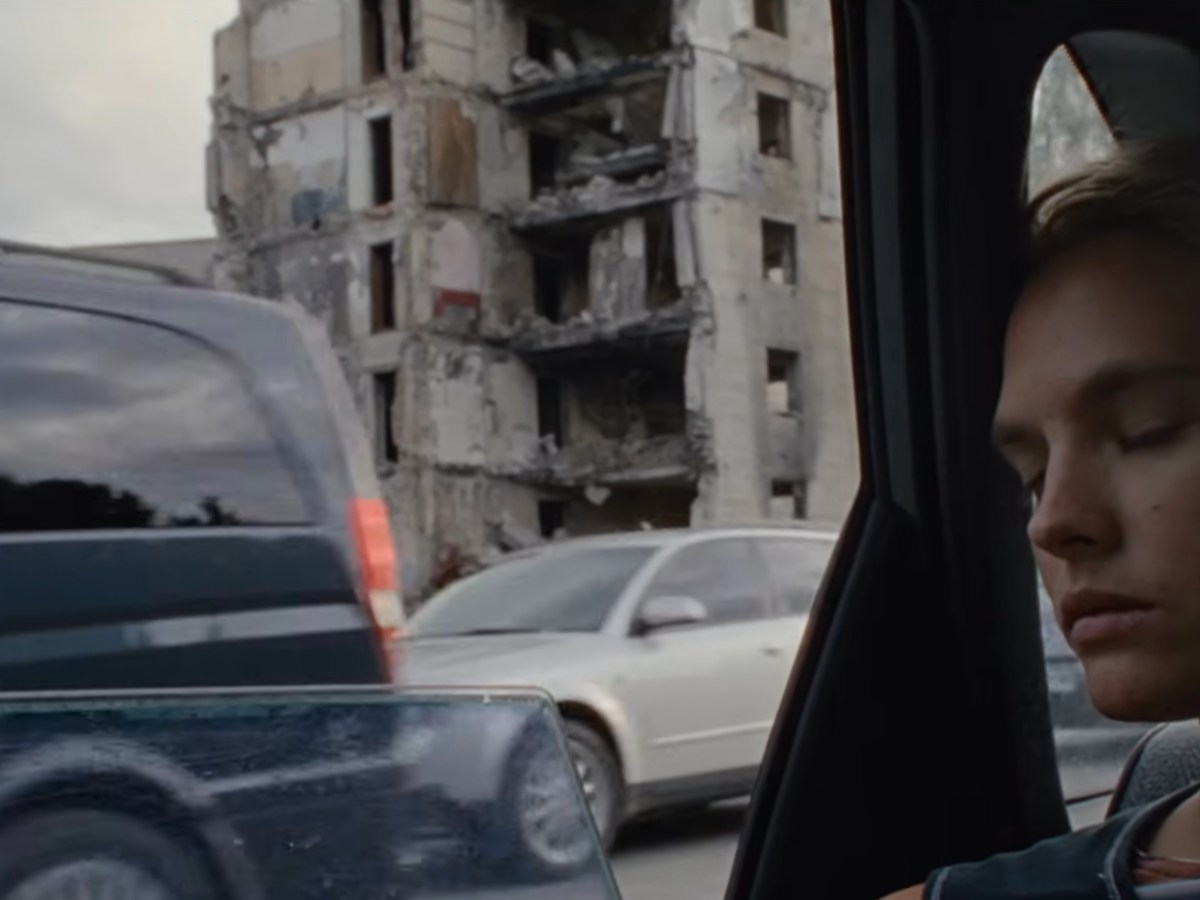
Shifting gears, let’s talk about another legend: Godzilla. Is it true you had a part in the CGI work on Godzilla Minus One as well as voicing some of the American narration? How did you end up in Takashi Yamazaki’s world?
That is IMDB b.s. Never believe anything you read on that site. But yes, I have worked on a bunch of Takashi’s films, including both Godzillas — we are just finishing Minus Zero (I like it even more than Minus One to be honest). I think the thing we are doing now is my sixth project with him, but the irony is that I haven’t been very much involved in the VFX aspects of his projects. I have what can best be described as a roving commission — I directed mini-sequences in both Minus One and his kamikaze movie Eternal Zero, and I’ve also done all manner of odd jobs, from designing motion graphics and fake CIA documents, to writing English-language dialogue and outfitting WWII soldiers. And a couple cameos, but I suspect they only cast me because the costumes fit. I have massive respect for Takashi and really enjoy working with him and the crew.
One last question. At this point in your career, you’ve done a little bit of everything — from VFX, CG animation, and live action to translation and soon stop motion animation. With Tekkonkinkreet turning 20 and Sunny still a few years off, when you look back at it all, is there a thread that ties it together?
Someone I really respect told me that it’s important to choose a theme for one’s career, and to stick with it. It’s advice that’s echoed in my head for many years now, and every now and then I try to really focus on one thing — directing, for example — adopting a stoic attitude, and excluding everything that doesn’t meet the test of “relevance” to that pursuit. But, to my deep frustration, it’s been impossible to keep this up for long, and I always seem to find myself wandering off the main road and onto the side streets and down the back alleys. Looking for a single thread connecting everything — a “theme” — is a hopeless task: my path always ends up looking like the proverbial drunkard’s walk rather than the well-defined road map I sometimes aspire to.
Then again, maybe the lesson is that the random walk isn’t the enemy of a meaningful career. Every “detour” I’ve taken — motion control stages, programming cel shaders, learning Japanese, manga obsessions, stop-motion miniatures — turned out not to be detours at all. It was all research. Unplanned, chaotic research into the question of what images can do to a person — how they can stop time, open a door, change everything. I think that’s what I’m trying to do: build a room that someone walks into and doesn’t walk out of the same. So maybe that’s the thread.
Thanks again to Michael Arias for taking the time with me. You can follow him on Bluesky at @michaelarias.net. Tekkonkinkreet is available for preorder now and releases September 1, 2026 on 4K Blu-ray/digital.



Leave a Reply