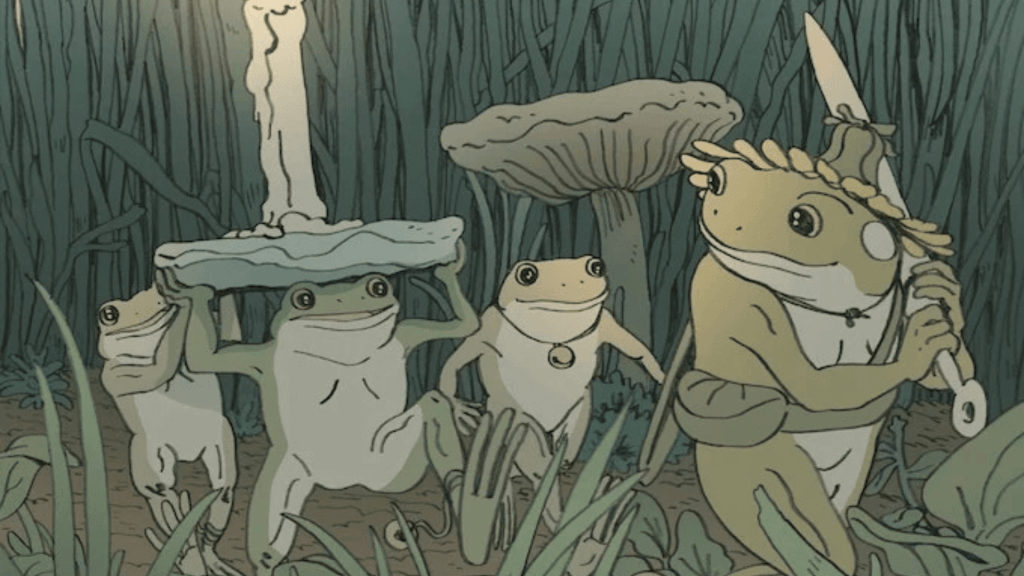
When it comes to comics, I’m usually drawn to stories that trust the images to do the talking. That’s what first pulled me into Matt Emmons’ graphic novel The Council of Frogs. I love its cinematic panel layouts and the earthy texture of Matt’s art.
The story revolves around a dying battlemage, who collapses in a swamp and, through magical means, creates a family of sentient frogs, one of which is sent on a quest to deliver a message that could save his family. It’s a cozy dark fantasy, full of warmth and heart. It’s just so dang good!
After reading several of Matt’s other books, I went on my own quest to learn more about his work and process.
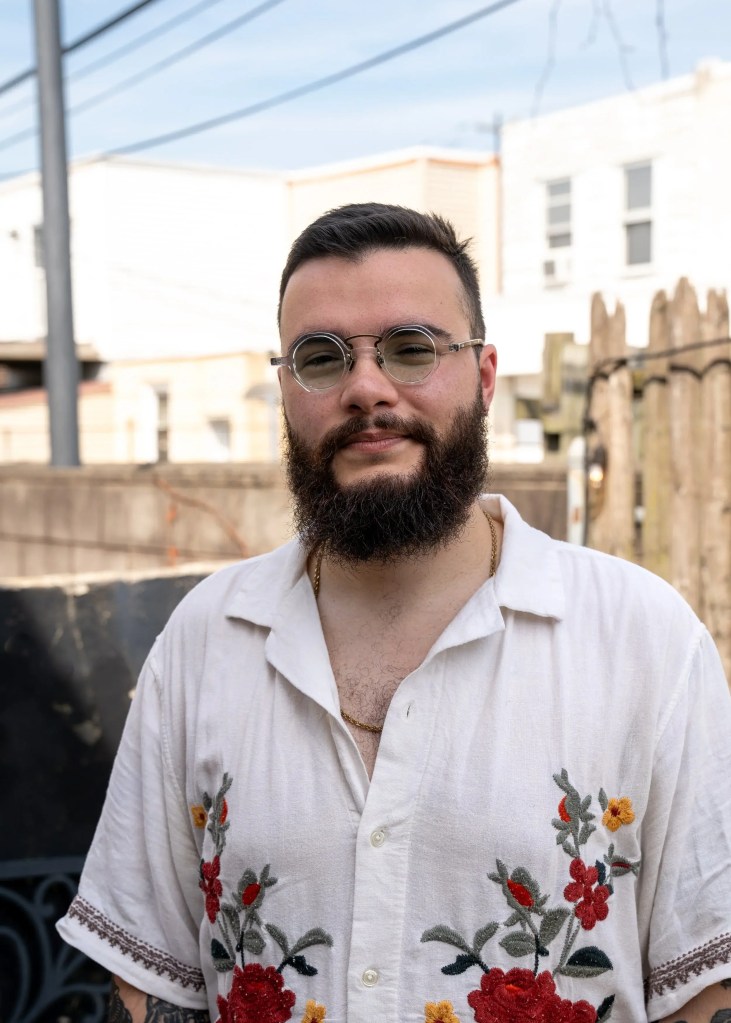
Matt Emmons is a Philadelphia-based comics artist and illustrator who grew up on a diet of ’80s monster movies and fantasy novels. Having raised more than $275,000 on Kickstarter, he now runs Second at Best Press, a one-man micropress putting out his original comics, risograph prints, and apparel. You can also find his work through IDW, Mad Cave Studios, Métal Hurlant, Heavy Metal Magazine, and ComiXology Originals.
A few weeks ago, Matt was kind enough to take some to talk with me about his path into comics, the stories behind his books, and what’s up next. I hope you enjoy!
Matt, thank you so much for taking the time to talk with me. I really appreciate it. I’m a big fan and excited to dig into your work.
Thanks for having me!
How did you end up making comics? Was it always the plan, or did you find your way there from somewhere else?
I started making comics around 2015, which is not-so-coincidentally when I started reading comics as well. I was in college for animation and felt increasingly like working for a studio or as part of the animation pipeline wasn’t for me. As I got into reading more comics, I realized comics had all the aspects I loved about animation, but were significantly more sustainable to do as an individual.
So in short, I did always want to be a working artist, but I had no idea comics was an option until I was 20. Then, it was all I could think about doing, and thankfully I still feel the same way!
Who are some of the artists that inspired you starting out, and who inspires you these days?
Starting out it was a lot the usual suspects of Moebius/Giraud and Mignola, but the ones who really kicked me into gear were (and still are) Guy Davis, Linnea Sterte, Simon Roy, and Artyom Trakhanov. They’re all making such unique work, and I’ve been keeping up with them since I first got into making comics myself and they continue to inspire and floor me with everything I’ve seen.
This might sound like such a boring answer, but outside of artists I’ve been really inspired by nature more than anything lately. There’s so many incredible animals, plants, and places that I’m always trying to learn a little more about the world while I draw now.
Not a boring answer at all! I read that you grew up on the North Shore of Massachusetts and loved its more overgrown, wild spots. Did those places shape the worlds and creatures you draw now? And what’s the most recent thing from nature that caught your attention while drawing?
In more ways than I realized! The interest in creatures came both from the natural world, but also from all the 70s and 80’s monster/sci-fi/fantasy films I couldn’t get enough of as a kid too like The Thing, Alien, Predator, etc., etc., but my interest in that combination of post-collapse and nature reclaiming things definitely came from my childhood home. My parents bought a fixer upper farmhouse when I was a few years old but never quite finished fixing it up, so there were parts that always looked run down, especially the barn. My dad was a mechanic, and a fan of antiques, the barn became his garage for fixing cars and all sorts of parts and machinery mingled with the tall grass in the less maintained parts of the yard, which sat at the foot of some wetlands. I never thought it looked terrible; it was home I definitely internalized that imagery, found it peaceful and beautiful combined with the large stretches of wetlands that were unlike the rest of the suburban town I lived in. I spent a good deal of my childhood traipsing around those wetlands in search of frogs and salamanders, lifting up rocks in search of insects to see, and gazing in tide pools to marvel at all the tiny, unique animals when we visited my grandmother in southern Maine.
While I’ll always have a love for New England wilderness, most recently I’ve been thinking about the desert a whole lot, specifically southern Utah. After having spent a few weeks hiking and camping out there with my wife right before we had our son, I know I won’t get it out of my system until I’ve set some story in there (maybe a few, in different ways), so I keep circling back to it to learn more.
What does a normal working day look like for you? And how do you know when a piece or page is finished?
My days are a little less consistent now with a 1 year old running around, but when I can I try to start working as early as I can. The work/life balance is forever a moving puzzle so I try to carve out days for errands and admin work (emails, shipping orders, etc.) and days for drawing.
As for when a piece is finished, it’s hard to say! Sometimes it’s very clear which is great, and other times I have to stop myself because I can’t let it eat up more time on the schedule. Doing two books at once for most of this year has made me very… efficient with my time, out of necessity. That being said I do try to let pages/pieces that give my trouble sit for a day or two and work on other things so I can revisit them and see if it’s clearer what I need to change. That usually helps, but also comics are very much a sum of their parts sort of deal so you can’t be too precious when you have deadlines.
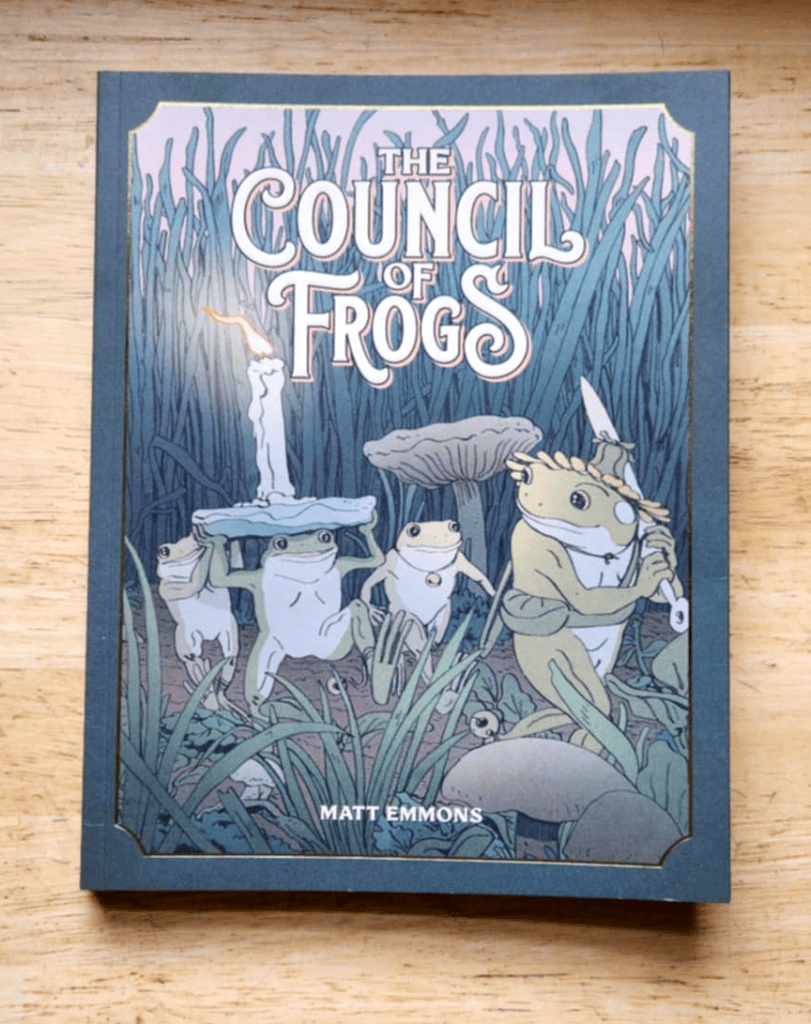
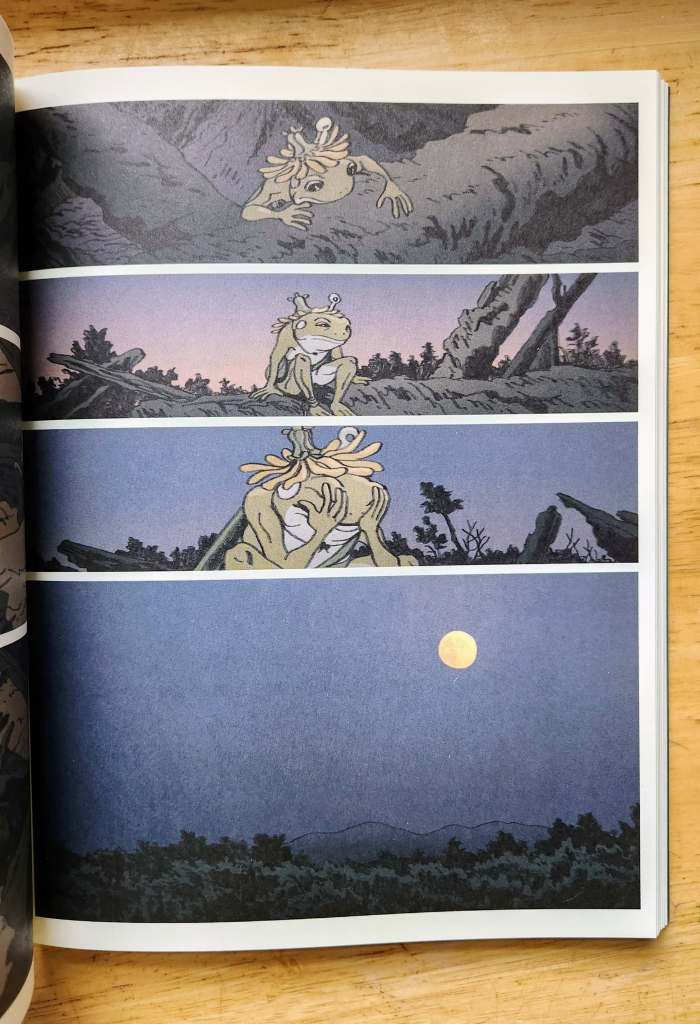
My first encounter with your work was The Council of Frogs. It blew me away. Can you tell me a bit about how this story came to life and what its journey to completion was like?
That’s so kind of you to say! Don’t tell the other books, but The Council of Frogs is definitely my flagship title so to speak.
Oddly enough, most of the world building came from a story I planned to do before The Council of Frogs, but the crux of that story was too complex for me to have done properly at the time. I had this little one off scene planned where the main characters – among them the Warlock from The Council of Frogs – meet a creature traveling with a coat full of frogs that give them a motivational speech. As I was feeling stuck on that story, I kept going back and wondering “what’s the deal with these frogs?”
I quickly made a short story that essentially amounts to the first chapter of the book, before having to shelve it for a good year or so to focus on my day job managing a screen print shop at the time. Once I moved from Massachusetts to Philadelphia, I took the plunge and switched to working full time as an artist so I could get back to working in earnest on it.
Underneath the story, what was The Council of Frogs about for you?
This one was deeply personal, even though it wasn’t a conscious choice as I was drawing it. To be candid, my dad passed away from cancer in 2020, and it was awful.
The book ended up being my way of working through it, wrapping my head around it and learning to live with it. Once I finished the book and read through the whole thing was when it clicked – and I bawled my eyes out. It’s why I dedicated the book to him, and to all parents who were like him.
My favorite part of it coming from a vulnerable place is that people of all ages come up to me at shows and message/email me to say the book helped them similarly dealing with loss of family and loved ones, all without me saying anything about my personal experience. It’s more than a little bittersweet, and I’m grateful for people sharing their stories with me.
The world of The Council of Frogs feels so rich, like there’s so much more to explore. Do you have any plans to go back to it?
I definitely plan to spend more time in the world! Now, the next book I’m planning on is what’s become of that initial story about the Warlock that was too tough for me to crack all the way back in 2021. After the Warlock book I do have one more frog book planned, introducing a new generation of frogs and showing what’s become of them as they make their way in the wider world.
Beyond that, who knows! I do love a story that ends, so I want to make sure I always have a reason to revisit a setting, so for now it feels like three books in the world feels right.
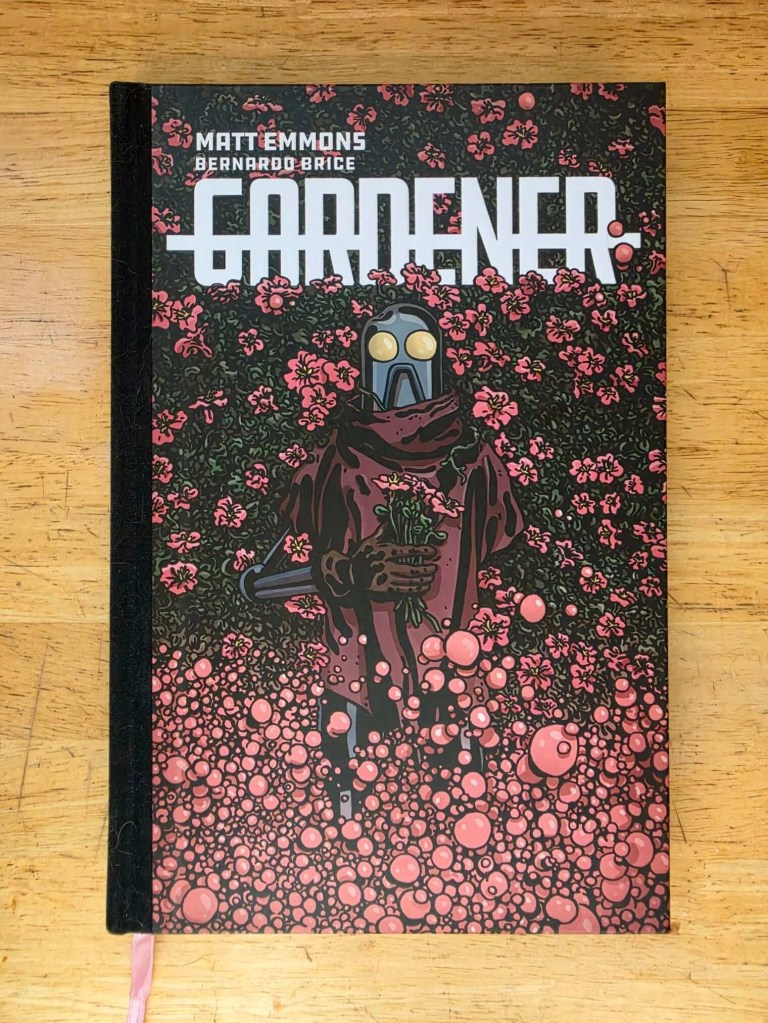
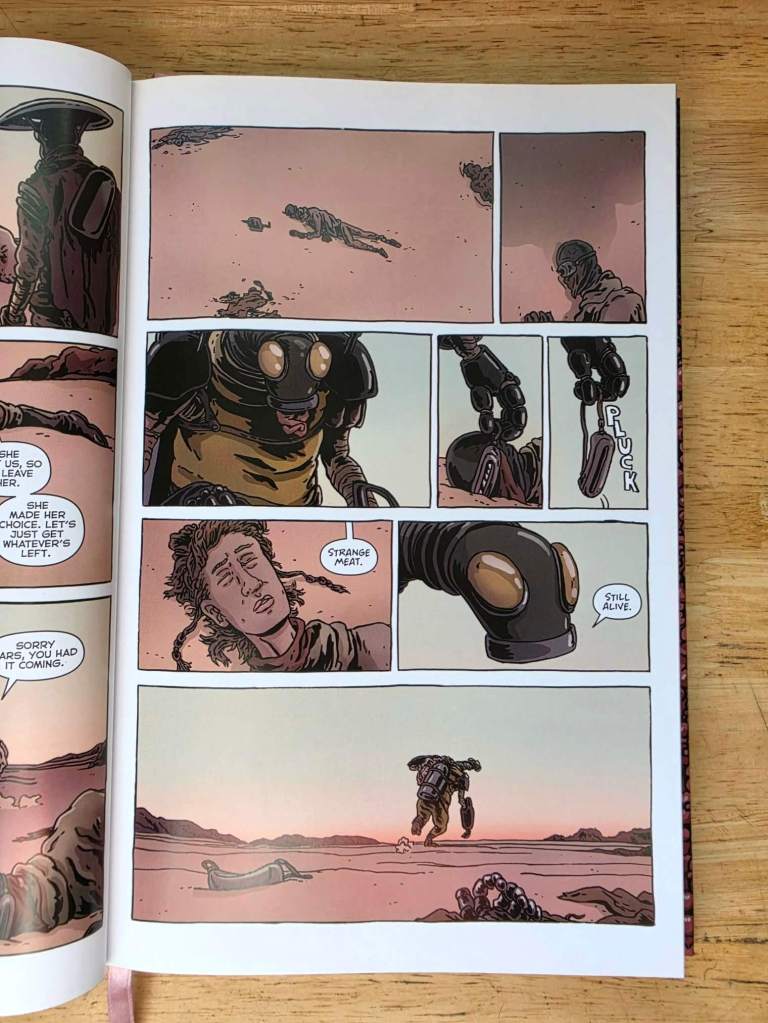
Another work of yours I really love is Gardener. It’s such a beautiful book. What was the spark that got that story started?
Thank you! Gardener was my very first “full” story, or something longer than 20ish pages at least. It was an idea I’d been playing around with in college, where a loose version of the story was my thesis film. Like most of my work, Gardener was born out of my love of sci-fi/fantasy from the 70s/80s, and an eternal interest in post-fall world building. Growing up watching movies like Star Wars, all of the most interesting characters to me were the weirdos you catch glimpses of. I decided I’d rather make a world full of only the weirdos and see what that would be like for me.
I can’t bear to rewatch it because it looks sooo dated, but here’s the Vimeo link to the whole short film in case you’re curious. The music still holds up, though naturally I didn’t do that part. Haha
The whole thing was hand drawn and shot on a down shoot camera versus digital line art, and funny enough I’m realizing now that I’ve looped back to doing pencil only line art for all of my work.
Is there a moment or page in Gardener that’s especially close to your heart?
I’ve never thought about that… I sat with those characters for nearly seven years between the thesis film and the book itself, but I still can’t quite land on who my favorite is. If I had to pick one, it would be the whole arc of the two masked Junker goons, Emmie and Kenga. They weren’t supposed to join the main cast – or even be relevant at all – but I had so much fun drawing them that they snuck their way into becoming main characters.
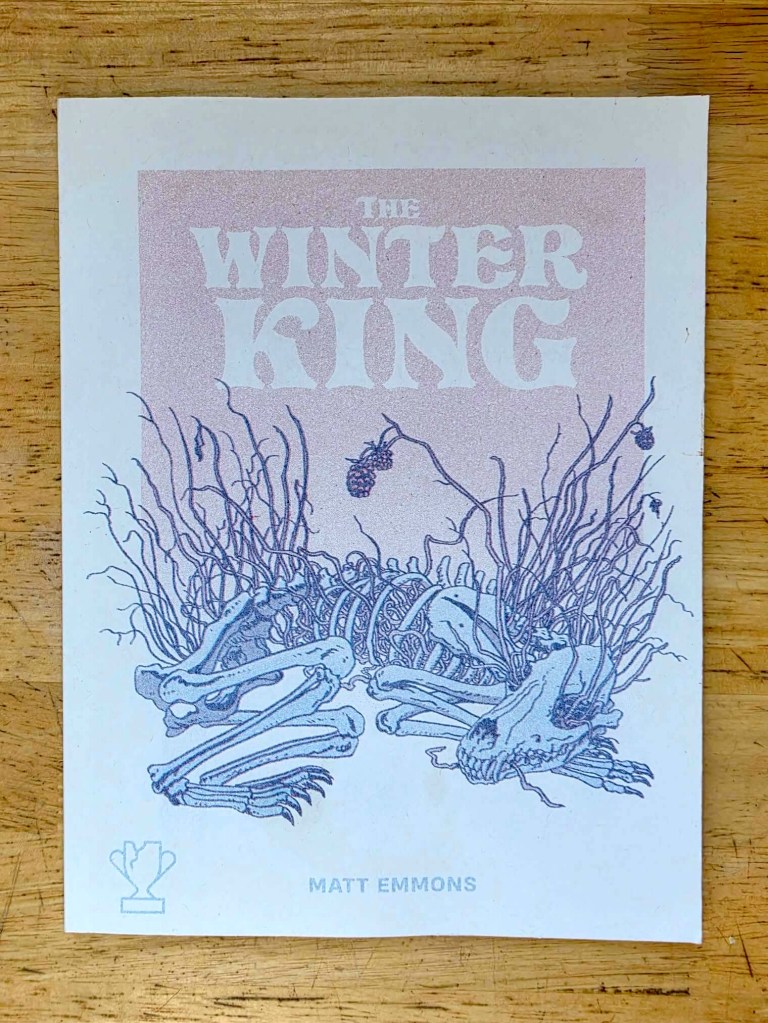
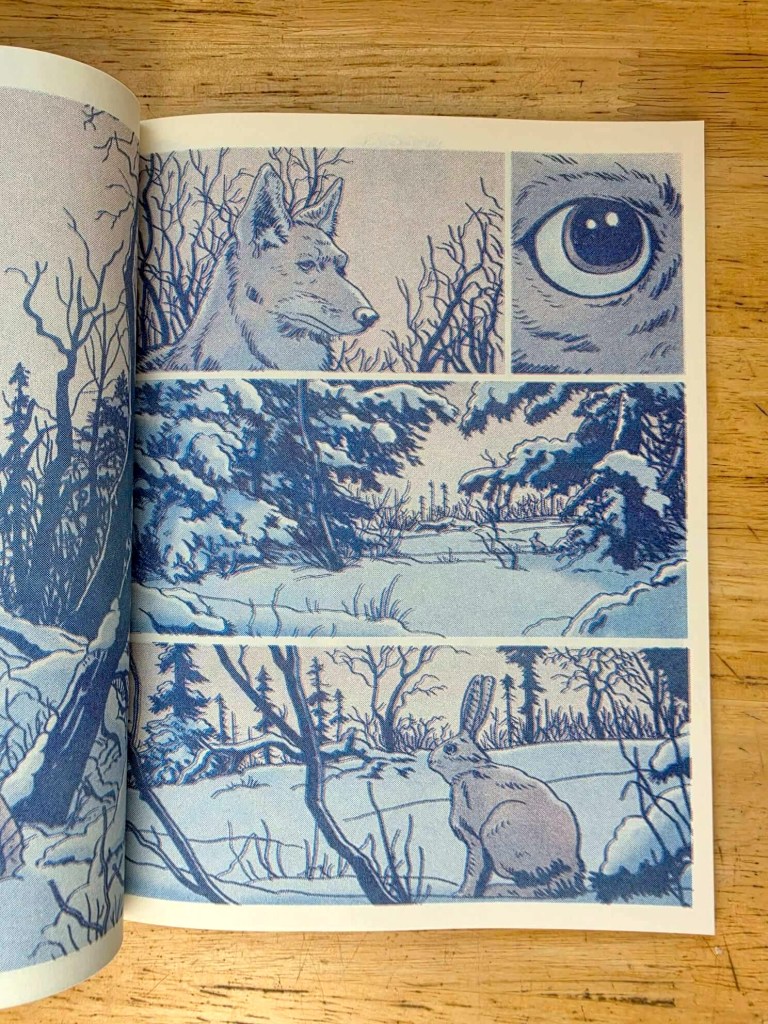
In The Winter King, you tell the story without words. What made you want to take that on, and what did it change about how you approached the pages?
I’ve actually done a few stories with no dialogue! They’re all out of print now, but I’ve done one other 40ish page story called PARENT and a couple 8 page short comics with no dialogue. Originally I leaned towards no dialogue because I was a terrible letterer, and I couldn’t afford to pay someone to letter them. The cheapest option for me to make a decent book at first was to have it be quiet!
Once I drew the first one, I really loved the challenge of keeping the narrative clear using only the artwork and not relying on any narration or dialogue to over-explain what’s happening. It’s why even in my books with dialogue, there’s typically nonverbal characters and a decent chunk of wordless pages. Especially in The Council of Frogs, where the frogs felt much more expressive using only body language vs having them speak.
Do you notice themes you keep coming back to across your books?
I’m forever thinking about the end of the world. What that meant to me and why I’m was fascinated with it has shifted as I’ve grown older, become a parent, and widened my worldview a bit. While I used to love the ruins and the grunginess of it, I’m more interested in thinking of what happens in the post-post apocalypse, where it’s not really an end-of-the-world scenario, it’s just how the world is. Things are always ending, and beginning, for better or worse, so that cycles through my head constantly.
A lot of your books, like Gardener and The Winter King, have been funded through Kickstarter. What’s that process like for you?
Kickstarter has been vital to me being able to be an independent, full time artist.
What would you tell someone thinking about running their first campaign?
Do it! It’s very daunting because you can tangibly see the amount of money you’re asking people for, but it’s also a very exciting and rewarding leap to take.
I would always recommend someone start off with a small project, something they know they can feasibly achieve both from a production and financial standpoint. Do the math on what it will cost you! Be honest and accurate with that and you can set a reasonable expectation for yourself and for backers.
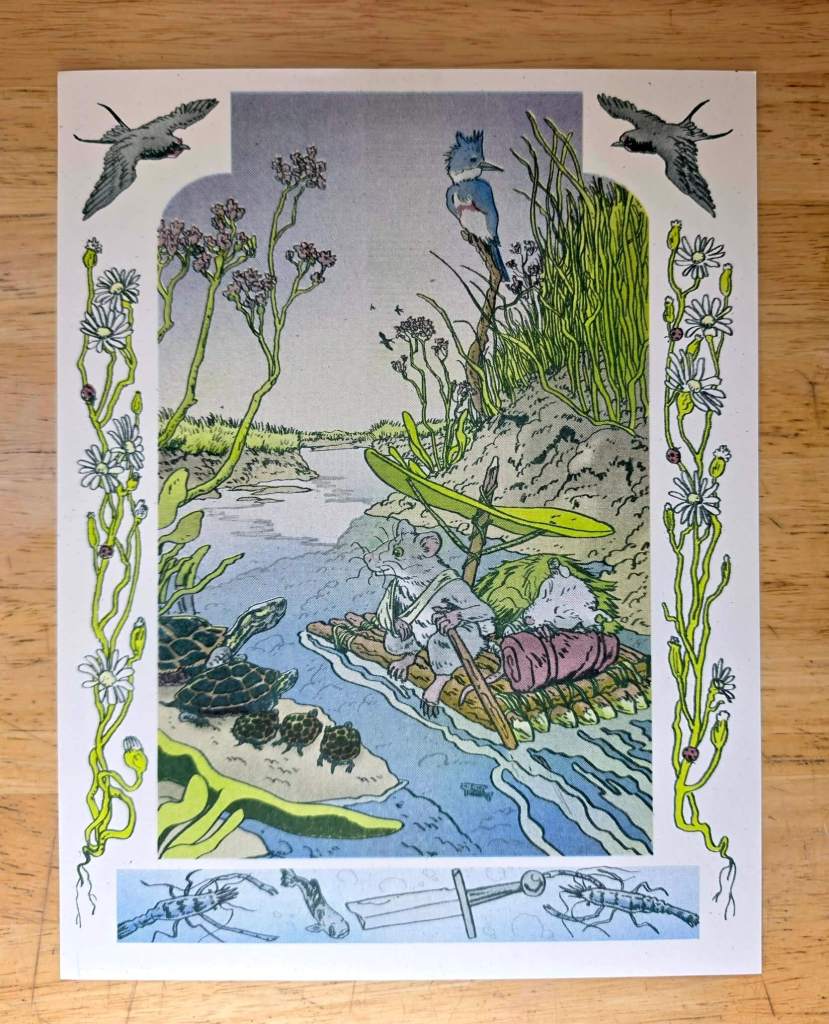
You also make these incredible riso prints for sale on your website. For anyone who hasn’t come across risograph printing, what is it, and what drew you to it?
The way I always explain risograph printing is that it’s sort of like if a Xerox machine had a baby with a screen print press. It functions similarly to a standard office copier but the printing process itself is more akin screen print, albeit with a more automated nature since you’re not manually pulling ink through a screen.
It’s such a fun, distinct printing method and I love printing my own prints so I get to have an extra hand in the process aside from drawing them.
Lastly, what projects are you working on right now and when can we hope to see them?
I just wrapped up working on a licensed comic series written by Tate Brombal (a very talented writer and equally wonderful friend) that I’m very excited to talk about soon. It’ll be announced this year at NYCC at the Skybound panel on Friday 10/9!
As for my own independent work, I’ll be getting back to the world of The Council of Frogs with a follow up book, The Warlock and His Tower of Metal. It’s not a direct sequel as you won’t need to have read Frogs to follow it, but it’ll be expanding on the setting and focusing on the Warlock in particular. I finally get to draw his weird, sinister tower, and show why the little frog was right to have stayed away from it. It’s a ways away, but I’ll be launching it on Kickstarter April 2027.
Thanks again to Matt Emmons for taking the time to talk with me. If you’re on social you can find follow him on Bluesky. You can find his comics, prints, and apparel available for purchase at Second At Best Press. Do yourself a favor and follow him on Patreon, as well, for some cool behind-the-scenes posts, print discounts, and more.



Leave a Reply