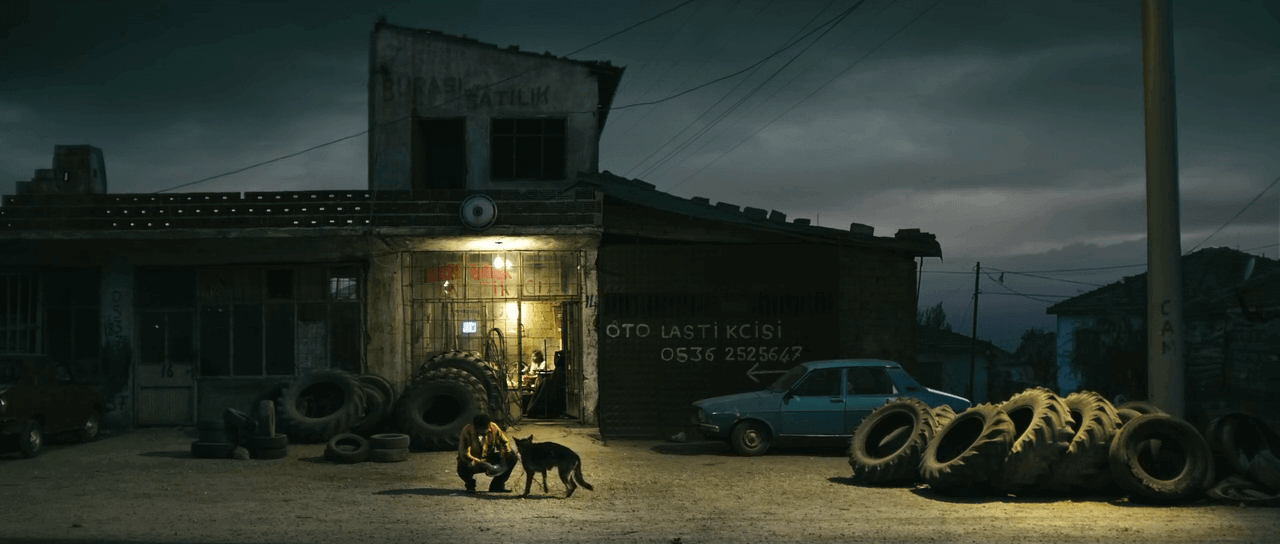

I’m reading the biography of Shinobu Hashimoto, who was the screenwriting partner of Akira Kurosawa. It’s fascinating. I love hearing firsthand how people’s filmmaking careers began, especially in this time period. One of the directors mentioned in this book is Hiroshi Inagaki. This led me to find his beautiful little film The Rickshaw Man (1958).
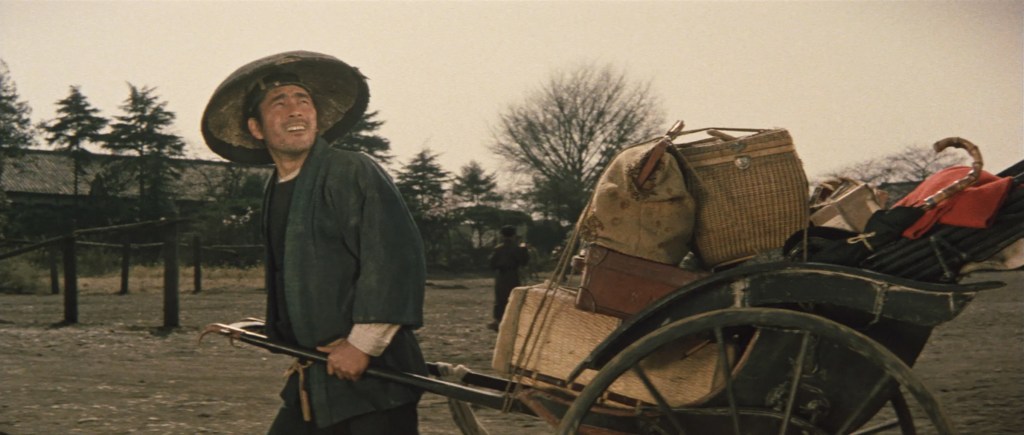
The Rickshaw Man stars Toshirô Mifune as the titular character, Matsu, the rickshaw man. Matsu is an immature but humble guy, born into poverty and played with incredible sensitivity by Mifune. Having dropped out of elementary school, Matsu has lived a simple life and considers himself of no value to the world. He’s gruff and rough, but this wild man has only pure intentions, regardless of what he’s doing. You can’t help but like him from the get-go.
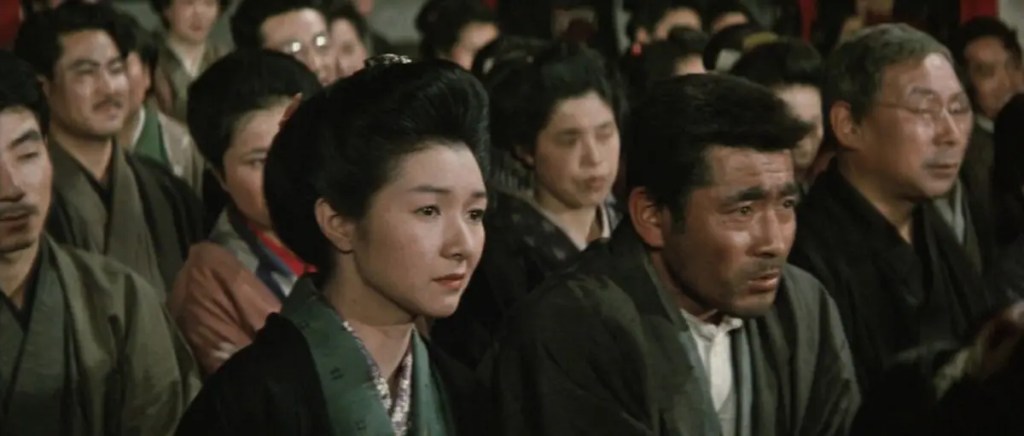
Set in the early 1900s, the film tells the story of Matsu’s devotion to a widow, Yoshiko, and her young son, Toshio. After her husband dies unexpectedly, Yoshiko, played perfectly by the always amazing Hideko Takamine, begins to rely on Matsu’s father-figure-like presence in their lives.
On a related side-note, without even trying, I’ve watched several movies recently that starred Hideko Takamine. Her role here, as in so many others, isn’t always flashy, but she shines in each of them, leaving a lasting impression that she makes look so easy.
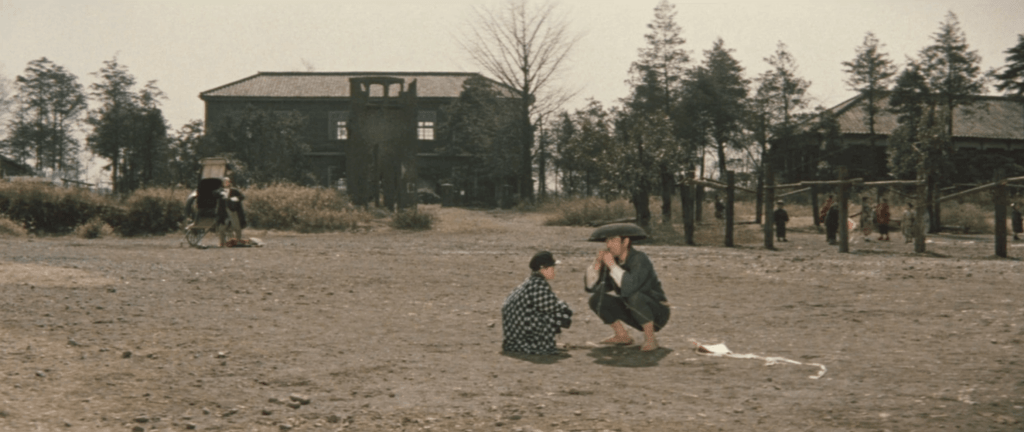
Something that really made this movie standout to me was the abundance of goofy humor sprinkled throughout, from a cookout brawl at the theater to the moment when Matsu abandons his rickshaw fare to help Toshio untangle his kite in a field. They way Matsu abruptly pulls his cart to a stop and runs off to help Toshio, leaving his customer stranded in the cart. You can feel his wheels turning and his snap decision. The customer is left jumping angrily in the background which feels like a moment from a silent film, recalling Hiroshi Inagaki’s silent film roots. It’s silly, but a welcome and charming change of pace.
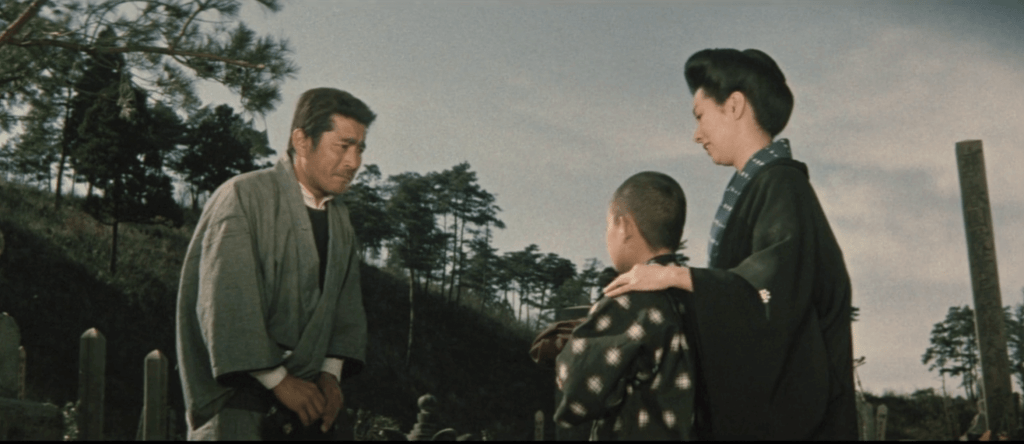
The cinematography by Kazuo Yamada is beautiful, with almost painterly compositions. I’m not sure why, but it reminded me a bit of Rebel Without A Cause. Strange comparison, I suppose. Perhaps some of the same lenses and film stock were used. The music is fantastic as well. Composter Ikuma Dan‘s sentimental score is never overbearing and helps gently sweep you up into the emotions of the story.
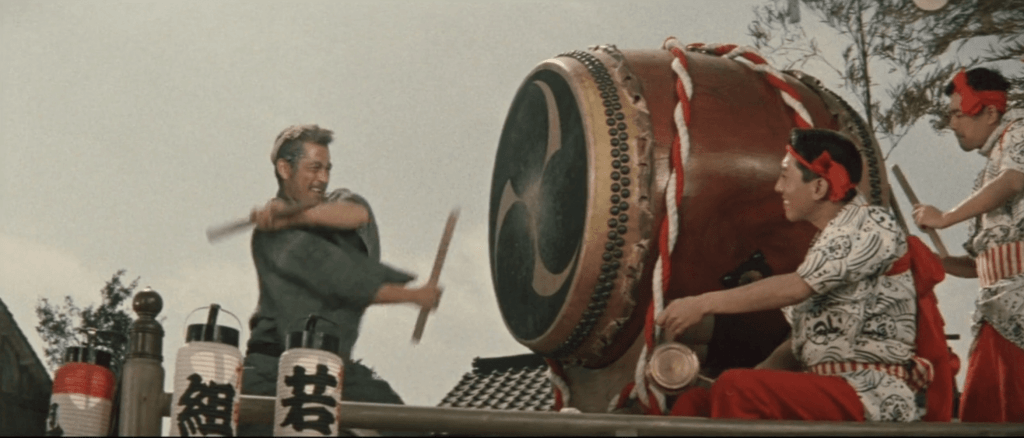
There is also an amazing scene late in the film the centers around the playing of ceremonial drums. This scene alone is worth the price of admission. It’s shot and performed with such gusto, and the performances feel so authentic, it catches you off guard. It’s a truly beautiful moment that feels intimate and epic.
I love The Rickshaw Man because it’s a film that wears its heart on its sleeve and is a real showcase for Mifune’s range. Watching the years pass as Matsu shows incredible kindness and devotion to Yoshiko and Toshio, never asking for anything in return or accepting any gifts, is both inspiring and heartbreaking.
Apparently, there are two versions of this film, both directed by Inagaki. The earliest version is called The Life of Matsu the Untamed (1943). I was unable to find a copy of that one. If anyone reading this can point me where I might watch it, please leave me a comment.
You can find this one on Criterion Channel. It’s not a film I hear talked about very often, but I highly recommend it to Mifune fans.

 Cinematic Point Of View
Leave a comment