
One thing I love about the early works of Masaki Kobayashi is his exploration of roles within a family and his portrayal of human dignity. Life can be hard. Life isn’t always fair. Even in the face of great danger or everyday adversity, Kobayashi’s characters generally work to do the right thing and still maintain their moral integrity.
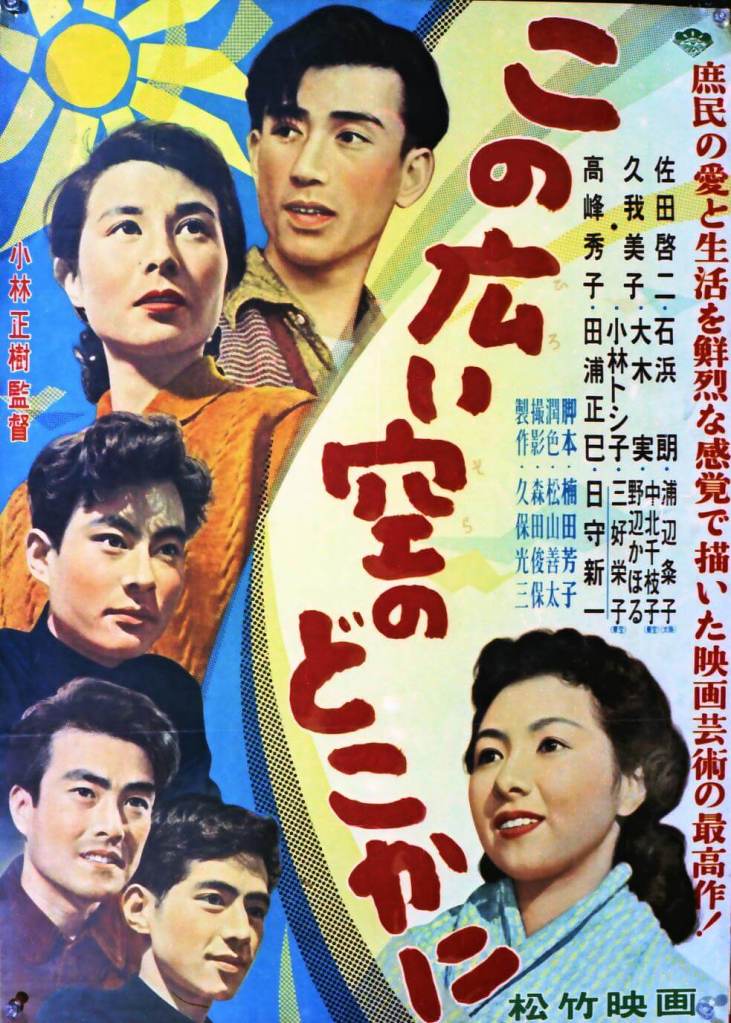
In his 1954 film Somewhere Under The Broad Sky, we follow the story of a family living in post-war Tokyo who run a liquor store and struggle to connect with each other while trying to make ends meet.
Shot in Kobayashi’s typical naturalist manner, the film unfolds in ordinary day-to-day situations that are intimate, realistic, and relatable. As I was watching this one, I couldn’t help but imagine Jimmy Stewart or Donna Reed in a few of these roles. It’s not a far stretch of the imagination.
The cast includes Masaki Kobayashi regulars Hideko Takamine, Yoshiko Kuga, Akira Ishihama, and Keiji Sada. It’s literally the same cast from Beautiful Days, and several other previous films. I’ve really grown to appreciate all of these actors.
Like everything that Kobayashi produces, the characters and the conversations are full of social observations with particular focus on women’s issues.
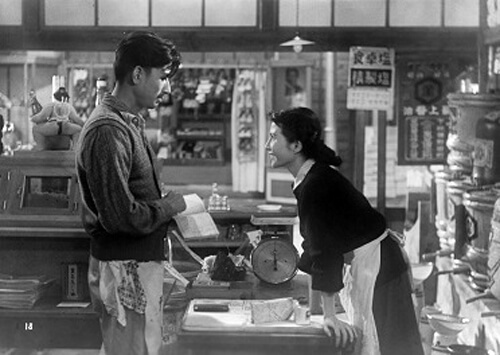
There is the older brother, Ryiochi, who married for love instead of an arranged marriage. He and Hiroko, his wife, run the liquor store and live with his mother, younger brother Noboru, and sister Yaskuo. Hiroko often feels unliked and finds it hard to live up to the standards sought by her mother-in-law and the community. An old friend from her village shows up, and he further complicates her feelings.
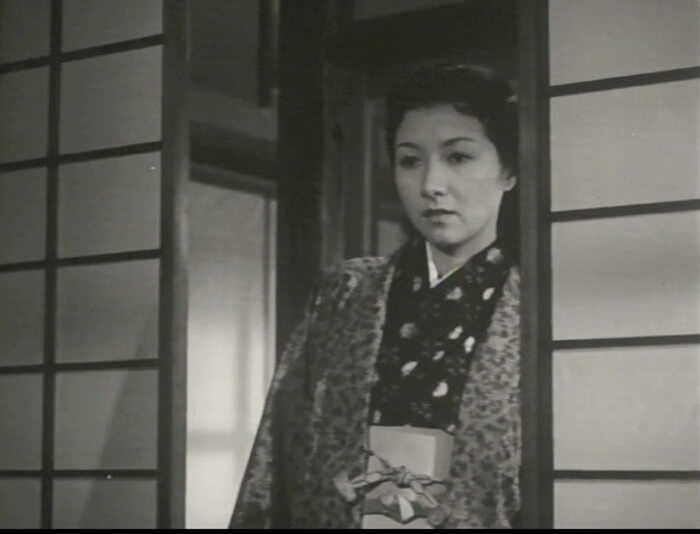
We have the sister, Yasuko, whose husband left her after returning home from the war to find that she had been injured and now walks with a limp. She suffers from depression and feels lost in a world that often sees her as broken.
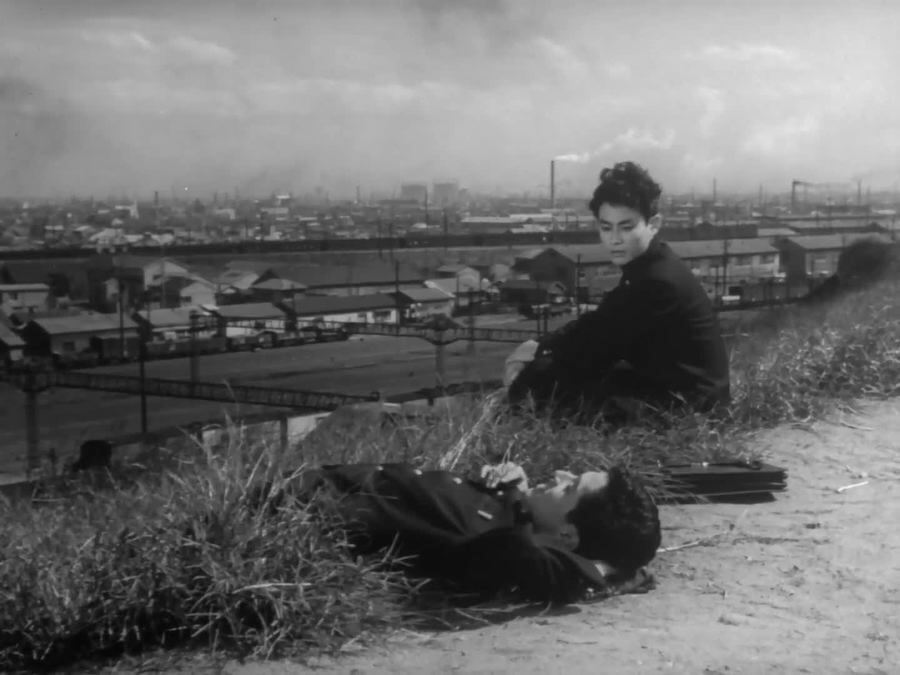
The younger brother Noboru struggles with his feelings about the future. He represents the struggles of post-war youth in Japan, torn between traditional obligations to his family and wanting a future with more freedom.
For me, I love that Somewhere Under The Broad Sky wears its heart on its sleeve. You can’t watch The Human Condition every day, or you’ll sink under the weight. With a running time of just less than an hour, it does an excellent job portraying a snapshot of ordinary lives in a time of great transition and does what all great films do best: evoke empathy for the lives of others.
In the end, this is an easy going, slice-of-life story that will leave you feeling good.
If you’re interested in watching this one, you’ll be hard-pressed to find it! I had to order it on DVD through a seller who specializes in out-of-print media. It’s worth the watch, though, and at only $12, why not?
Hopefully, Criterion will pick this movie up one day and give it the love it deserves.


 Cinematic Point Of View
Leave a comment